Panel One
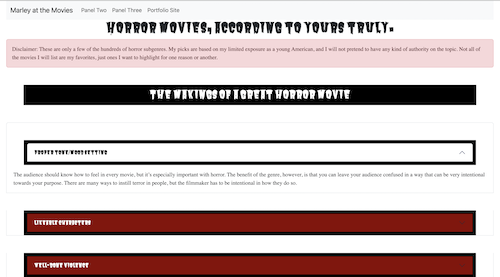
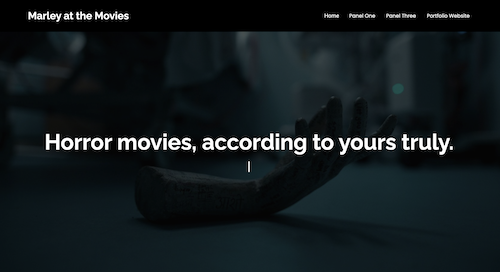
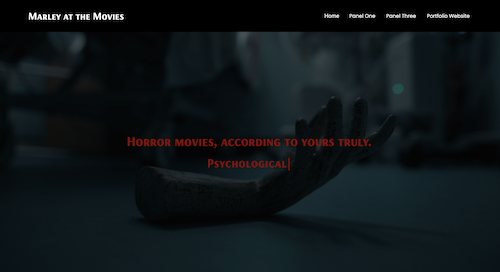
Using Bootstrap elements, I was able to find ways to take my content and present it in more digestible ways. My accordion turned a big block of text on a Google Doc into an interactive visualization. It was also a great tool in building my website, which allowed me a lot more freedom in what I did and allowed me to do more with my site in the same timeframe. I struggled to change the colors of Bootstrap components, but I eventually internalized my understanding of the different default classes and how to style them.
I also learned the sensitivity of certain elements. My carousel was temperamental as I resized it, and I struggled to keep all the controls working. I still wasn’t 100% satisfied with it but opted to leave it at some point. I also ran into issues with the grid and eventually had to copy and paste an example from Bootstrap. I was happy with the overall layout using the grid. I also loved the button to watch my favorite kill, it just felt like a fun touch.