

By Marley Hinrichs
In a genre with an extensive history of chilling and shocking imagery, it can be difficult for a modern horror film to find a permanent place in fans’ memories. However, the first trailer for Weapons secured its place in mine. The security footage of children running into the darkness, arms out to their sides, sparked questions that only this film could answer. Although the audience still has some of those questions by the end, it is a chilling and horrific adventure that tells an original story—sure to be remembered beyond this awards season.
Weapons was directed, written and produced by Zach Cregger. It is his sophomore directorial effort in the horror genre, following his 2022 film Barbarian. The films share unique concepts, disgusting moments, and chilling themes that have begun to cement Cregger’s style since his departure from comedy. Weapons sees greater creative agency and budget, and was a clear next step for the up-and-coming horror director, in anticipation of his upcoming Resident Evil adaptation.
This film follows members of a community in the wake of a mass disappearance, in which all of the students in one elementary school class, besides one, run away and disappear into the night. It’s a complete mystery to the town, which unfolds in a non-linear structure. Each chapter tells the perspective of different characters involved: a teacher, a father, a police officer, a principal, a drug addict and a student. Each chapter begins at the same point in time, and fills in the blanks as information is presented to each character.
Each chapter does a good job of evoking the feeling of the character it follows. Different shot and score compositions make you feel the paranoia of being distrusted by your town, the depression of losing your child or the desperation of facing withdrawal. The non-linear structure builds suspense, and allows you to become invested with each character individually. None of them are completely heroic, or even really good people at all—exhibited by performances from veterans such as Josh Brolin, as well as younger actors such as Julia Garner. You can’t trust them as they can’t trust each other, and the story will only come together completely at the end, with the perspective of the remaining child, Alex.
Alex’s perspective brings the film’s symbolic interpretation to light, as he is neglected, parentified and manipulated into silence by an oppressive adult. The fictional cause is a mysterious curse, but for many children this is a real-life situation brought about by mental health issues or addiction. The film even touches on how easily Child Protective Services can be evaded, and how bureaucracy and lack of resources will discourage public schools from going beyond the bare minimum to protect their students.
This ties back to one of Cregger’s theses regarding the film: the terror of the mundane. For the most part, the film does its best to remain very grounded. These people are like you and me, and they face regular consequences for their actions, and have relationships with one another that have nothing to do with the supernatural conflict of the story. There is an extreme to this, however; the film could have lost some of the mundane relationship building that did not fit with the main plot to improve the pacing and trim the runtime.
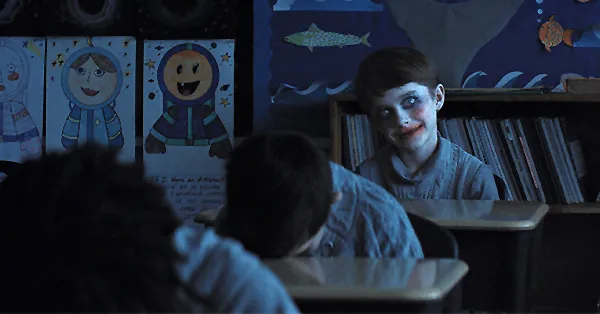
The grounded story becomes terrifying by the introduction of the antagonist, Gladys, as an agent of chaos. Her otherworldly look is horrifying, especially as she’s introduced in jump scares presented in shocking dream sequences. Amy Madigan gives an unhinged performance which, combined with her Technicolor look, leaves the viewer on edge the whole time she’s on screen. The beauty of the horror elements is that they overshadow the mundanity in the audience’s memory, indicating success.
Any mundanity remaining in the film is forgotten by the end, due to disgustingly gory moments. Black bile, peeled skin and torn-apart heads are all images that make your stomach turn, and take massive amounts of effort and collaboration to pull off. Most of the effects were done practically, led by designer Jason Collins, giving the gore a rawness that makes them even more disgusting and terrifying. When you and the characters are left with the pieces at the end, the reality sets in, as does the emotional impact of the film.
Though the film attempts to be as grounded as possible with interludes of terror, there are times that it falls short. There are moments and imagery that are never completely tied up or explained, and sometimes they feel silly. Granted, the humor this film has is a complement to the terror—as it creates a contrast between the highs and lows of these characters’ lives. However, there are suspenseful and frightening moments that needed to be played straight, yet the imagery caught me so off guard that I was laughing.
It can be argued that a film this long should not have loose ends by the final scene. We still have no confirmation why the things that happened did, or why and how the magic we see works. However, I think this was ideal. Had we gotten a full backstory and explanation of this completely fantastical setup, we would have found holes in it and the terror would have worn off by the end. The mystery and unpredictability kept the film engaging and chilling all the way through.
Horror movies often become less scary the more that you see, but Weapons had me surprisingly frightened the whole time. The plot unfolded in a suspenseful way, and the character development and worldbuilding kept me invested in the stakes. Combined with frightening absurdity and technically successful jump scares, this is an overall successful horror film that fans and outsiders can all enjoy.

Leave a Reply